
What is polyaspartic resin?
Polyaspartic resin (polyaspartic polyurea resin) is short for polyaspartic acid ester resin. It is a compound containing amine-reactive functional groups and belongs to the aliphatic family. It is generally a liquid. Unlike the common curing mechanism of epoxy resins, polyaspartic resin must be cured with isocyanates, mainly specialty isocyanates such as HDI and HMDI. Epoxy resins are typically cured with curing agents such as polyether amines, anhydrides, and amides.
The structure of polyaspartic acid ester resin is shown in the figure below:
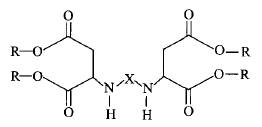
Depending on the substituent X, different products can be derived. For example:
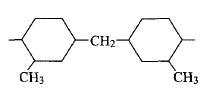
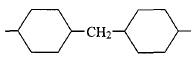
Feiyang’s F330 features a trifunctional structure, enabling higher crosslink density and improved elasticity.
Structural features of amine-terminated polyether:
H₂N–(–O–R–)ₙ–NH₂
From a structural perspective, compared with amine-terminated polyethers, the amino groups in the molecular structure of polyaspartic ester resin are surrounded by a sterically hindered, crown-like environment, which reduces the amine reactivity. As a result, polyaspartic ester resins offer more flexible application methods.
Feiyang Hot Selling Polyaspartic Resins
- F520 = Desmophen NH 1520
- F420 = Desmophen NH 1420
- F220 = Desmophen NH 1220
- F423 = Desmophen NH 1423
- F528 = Desmophen NH 1520C
- F2850 = Desmophen NH 1720/2850XP
Polyaspartic Resin FEISPARTIC Series
| Model | Density (25℃) | Viscosity (mPa·s/25℃) | Solid Content (%) | Equivalent Weight | Hydroxyl Value Eq. | Gel Time (min, 25℃, RH55%) | Application Areas |
|---|---|---|---|---|---|---|---|
| F420 | 1.06 | 800–2000 | 97±2 | 277 | 6.14 | 18 | Waterproof, anti-corrosion, floor coating and adhesive |
| F423 | 1.06 | 800–2500 | ≥99 | 271 | 6.27 | 26 | Waterproof, anti-corrosion, windmill blade, floor coating |
| F424 | 1.02 | 400–700 | ≥99 | 333 | 5.10 | 36 | Waterproof, anti-corrosion, windmill blade, floor coating |
| F520 | 1.06 | 800–2000 | 96±2 | 290 | 5.86 | 130 | Anti-corrosion, flooring, windmill blade coating |
| F520L | 1.06 | 700–2000 | 96±2 | 290 | 5.86 | 130 | Anti-corrosion, flooring, windmill blade coating |
| F523 | 1.06 | 1000–2500 | ≥99 | 290 | 5.86 | 130 | Anti-corrosion, flooring, windmill blade coating |
| F528 | 1.06 | 800–2000 | 96±2 | 290 | 5.86 | 180 | Waterproof, anti-corrosion, windmill blade, floor coating |
| F220 | 1.05 | 60–100 | 97±2 | 230 | 7.39 | 2 | Anti-corrosion, fast cure coating (can be packed in 15 mins under 25℃) |
| F2850 | 1.07 | 70–140 | 97±2 | 290 | 5.86 | 60 | Anti-corrosion, flooring, windmill blade coating and adhesive |
| F221 | 1.07 | 400–600 | 97±2 | 379 | 4.47 | 28 | Anti-corrosion, floor coating |
| F321 | 1.04 | 200–600 | – | 379 | 4.47 | 55 | Anti-corrosion, flooring, waterproof coating |
| F330 | 1.06 | 250–600 | 97±2 | 334 | 5.09 | 21 | Waterproof, floor coating, athletic facility, sealant |
Advantages of Feiyang’s polyaspartic resins
- In-house R&D lab since 2004 with 40 engineers, offering custom formulas and tech support.
- Three plants, 60,000 square meters of production area, serving 200+ firms in 30+ countries.
- Factory-direct, economies of scale, 20,000-ton capacity, 30+ years of industry experience.
- Produces polyaspartic resins equivalent to Desmophen NH series. 84 patents & 17 standards.
What is polyaspartic polyurea?
Polyaspartic polyurea is a new type of aliphatic, slow-reacting, high-performance coating material that has emerged in the polyurea industry in recent years, and it is often referred to as the third generation of polyurea.
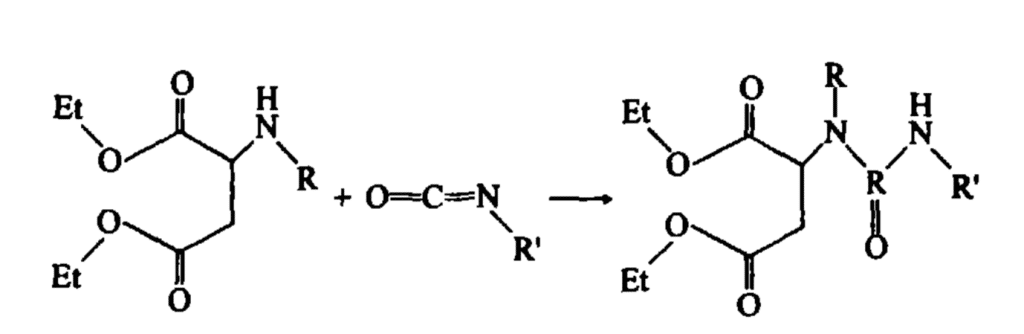
Polyaspartic polyurea is mainly formed through a rapid addition reaction between isocyanate groups (–NCO) and aspartate ester groups (–NH₂), producing tough urea linkages (–NH–CO–NH–) and building a highly crosslinked three-dimensional network structure. This reaction typically follows a “slow-to-fast” process: the aspartate ester acts as a “blocked” amine, delaying the reaction so that application becomes more controllable, ultimately forming a high-performance, solvent-free protective coating.
Polyaspartic polyurea technology creatively replaces the –OH groups used in traditional polyurethane technology and the –NH₂ groups used in spray polyurea with –NH groups, and introduces electron-withdrawing groups into the structure to further reduce reactivity. As a result, the application and coating process of polyaspartic polyurea becomes simpler, enabling a broader range of applications.
The figure below shows the reaction chemistry principle of polyaspartate ester polyurea:
Advantages of Polyaspartic Coatings
- Easy application: Overcomes the limitations of specialized equipment required for traditional polyurea. It can be applied by brush, roller, conventional spray, and standard airless spray, among other methods.
- Adjustable film performance: Can be formulated as a rigid coating with pencil hardness up to 2H, or as an elastomeric material with elongation at break up to 400% and tensile strength up to 25 MPa.
- Excellent weathering resistance: Can easily pass 1,500 hours of accelerated artificial aging tests.
- Superior adhesion: Provides better adhesion to substrates and can be used directly as a protective coating on metal substrates.
- Outstanding abrasion and impact resistance: Delivers better abrasion and impact resistance than epoxy and polyurethane coatings. Abrasion loss of elastomeric materials is ≤ 20 mg (sand abrasion tester, 750 g / 500 r), and rigid films can reach RCA ≥ 400 cycles.
- Good anti-corrosion performance: Strong resistance to corrosive environments and good resistance to chemical media.
- Excellent resistance to water vapor permeability: Effectively protects the substrate.
- Good temperature resistance: After curing, rigid materials can withstand temperatures up to 180°C.
Polyaspartic Ester Polyurea vs. Traditional Polyurea
| Polyaspartic Ester Polyurea | Traditional Polyurea (amine-terminated polyether resin) |
|---|---|
| Fast drying, improves production efficiency | Extremely fast drying, improves production efficiency |
| Aliphatic; excellent color retention and UV resistance | Average color retention and UV resistance |
| Adjustable dry film thickness, up to 400 μm | Ultra-thick film, up to 2.5 mm |
| Controllable VOC; adjustable solids content range (70%–100%) | Zero VOC |
| Multiple drying/curing speeds: 5 min–5 h | Single drying/curing speed: fast |
| Adjustable application time; can be applied with conventional equipment (from a few minutes up to 2 h) | Rapid application; must rely on two-component high-pressure hot spray equipment; high equipment cost |
Polyaspartic Ester Polyurea vs. Epoxy Coatings
| Polyaspartic Ester Polyurea | Epoxy Coatings (Epoxy Resin) |
|---|---|
| Less affected by temperature changes; can be applied normally at -5°C to 40°C and RH ≤ 85%, with fast drying (30 min–5 h) | Difficult to apply at low temperatures; often requires heating or other assistance, and curing at low temperature is difficult (48 h or longer) |
| Environmentally friendly, low odor, controllable VOC; application solids content 70%–100% | Epoxy curing agents are typically low-molecular-weight amines, so the odor is unpleasant and the volatile components are relatively high |
| Excellent color retention and UV resistance; outdoor use for 50 years without yellowing or chalking | Poor color retention and UV resistance; prone to cracking, edge lifting, and delamination |
| Rigid/elastic properties are adjustable; rigid systems can achieve good hardness while still maintaining some flexibility | Only rigid coatings can be made, and flexibility is poor |
| Excellent abrasion resistance and impact resistance | Poor impact and abrasion resistance; prone to delamination under external forces |
Applications of Polyaspartic Coatings
Industrial Anti-Corrosion
- Heavy-duty machinery
- Petrochemical storage tanks
- Overhead pipelines (DTM)
- Specialty container coatings
- Indoor & outdoor steel structures
Wind Power Coatings
- Wind power foundation ring/flange
- Wind turbine towers
- Wind turbine blades
- Offshore wind power steel structures
Flooring Coatings
- Heavy-load, high-compression-resistant floors
- Rapid repair flooring
- Cold-storage flooring
- Decorative/artistic flooring
Waterproofing Coatings
- Waterproofing & anti–ice-uplift protection for hydroelectric dams
- Kitchen & bathroom waterproofing
- Exterior wall & roof waterproofing
- Photovoltaic (PV) waterproofing
- Sewage tank waterproofing
Adhesives, Sealants & Structural Materials
- Tile grout / tile joint filler
- Stone joint sealant
- Electronic potting compound
- River tables
- Artificial Ice
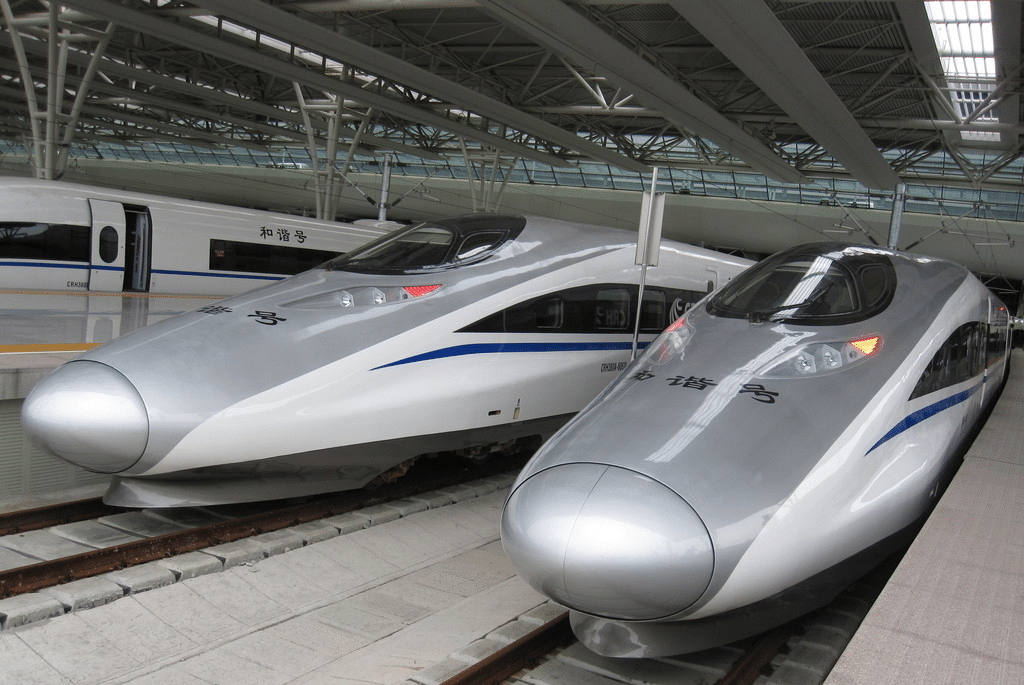
Polyaspartic Coatings Application Case – High-Speed Rail Waterproofing
Since 2009, Feiyang has collaborated with the Rocket Research Institute, Beijing Construction Engineering Research Institute, Dayuwang, Zhuzhou Feilu, Guangzhou Xiupo, and many other companies on polyaspartic polyurea projects, capturing over 70% market share in the aliphatic topcoat segment for high-speed rail waterproofing. Compared with the raw materials recommended by Bayer, the cost has been reduced by 50%.
| Item | Aliphatic polyurethane topcoat performance standard | Feiyang polyaspartic polyurea elastomeric topcoat performance |
|---|---|---|
| Tensile strength (MPa) | ≥ 4.0 | 16–25 MPa |
| Elongation (%) | ≥ 200 | ≥ 400 |
| Accelerated artificial weathering test | 1500 h | China Academy of Railway Sciences: 1500 h QUV test report |
| Adhesion (pull-off method) (MPa) | ≥ 2.5 | 9.2 MPa (failure at the sprayed polyurea layer interface) |
Articles on Polyaspartic Resin
- Where can waterborne polyaspartic coatings be applied?
- How to Extend the Pot Life of Polyaspartic?
- How to Calculate the Amount of Polyaspartic Polyurea Resin and Hardener?
- Formulation Design and Application of Polyaspartic Polyurea Adhesive
- Application of Polyaspartic Resin in the Preparation of High-Solid Acrylic Polyurethane Coatings